
Sep 23rd 2026
Is Ice Fishing Dangerous?
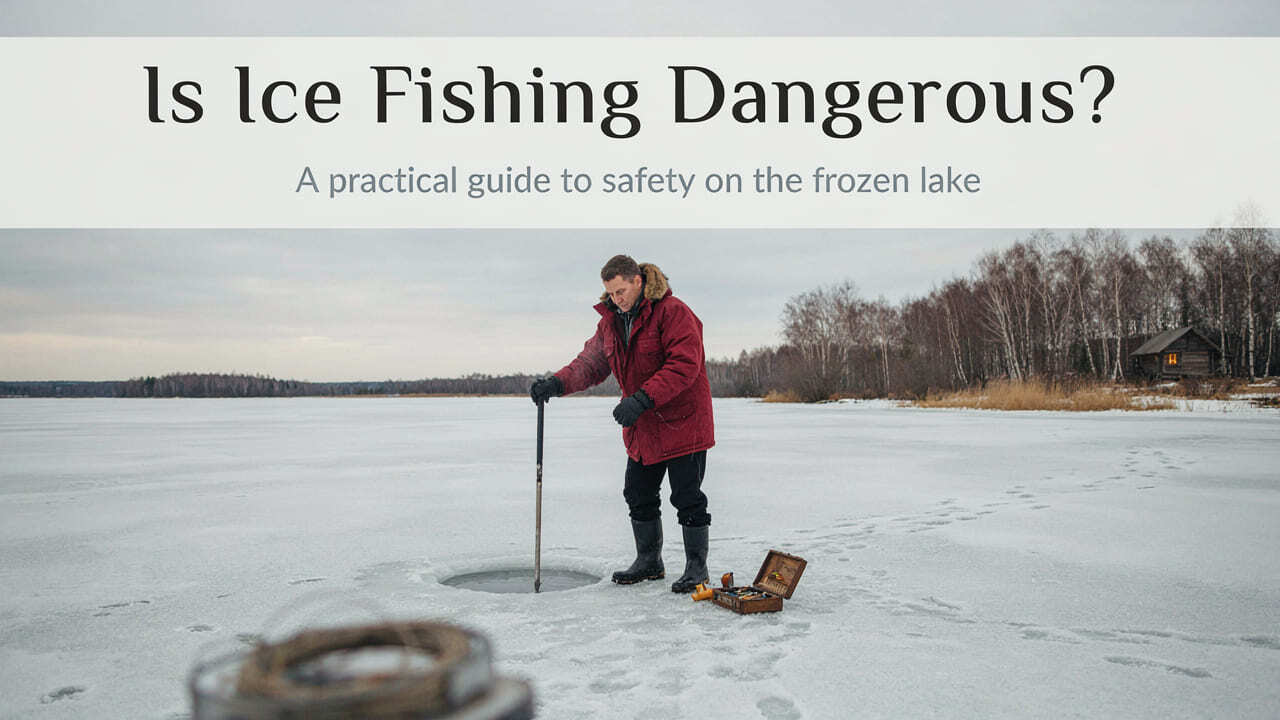
Is ice fishing dangerous? It can be.
The biggest risk is going through thin or weak ice. Cold weather, slippery surfaces, changing lake conditions, and driving vehicles onto the ice can also create problems.
That does not mean you need to avoid ice fishing. It does mean you should take ice conditions seriously every single time you go out.
No lake should automatically be considered safe just because it is frozen or because other people are already fishing on it.
Is Ice Fishing Safe?
Ice fishing can be enjoyed safely when conditions are good and you take the right precautions.
The important thing to remember is that there is no such thing as completely safe ice.
The Minnesota DNR points out that ice can be thick in one spot and much thinner only a short distance away. Snow, currents, changing temperatures, springs, wind, and other conditions can all affect ice strength.
That means you should never look across a lake, see a few fish houses, and assume the entire lake is safe.
Check the ice yourself.
How Thick Should Ice Be for Ice Fishing?
For new, clear ice, the Minnesota DNR recommends at least 4 inches before traveling on foot. If there is less than 4 inches, stay off.
The DNR's general guidelines for new, clear ice are:
- Under 4 inches: Stay off
- 4 inches: Walking and ice fishing on foot
- 5 to 7 inches: Snowmobile or small ATV
- 7 to 8 inches: Side-by-side ATV
- 9 to 10 inches: Small car or SUV
- 11 to 12 inches: Medium SUV or small truck
- 13 inches: Medium truck
- 16 to 17 inches: Heavy-duty truck
- 20 inches or more: Heavy-duty truck with a wheelhouse shelter
Important: These numbers are guidelines, not a guarantee.
They also apply to new, clear ice. White ice is weaker. The Minnesota DNR says white ice is about half as strong as new clear ice and recommends doubling the normal thickness guidelines when traveling on white ice.
When in doubt, stay off.
Ice Thickness Can Change Across the Same Lake
One of the biggest mistakes people make is checking the ice once and assuming it will be the same everywhere.
It may not be.
You might find 8 inches of ice in one area and much thinner ice farther away.
This is especially important around:
- Moving water
- Streams entering or leaving a lake
- Bridges
- Culverts
- Narrow channels
- Springs
- Pressure ridges
- Areas with heavy snow cover
- Shorelines
- Areas where water has recently opened and frozen again
Currents are a big concern because moving water can keep ice thinner even during cold weather.
If you are walking onto unfamiliar ice, check the thickness as you go instead of checking only at shore.
How Do You Check Ice Thickness?
A spud bar or ice chisel is one of the most useful tools to have, especially early and late in the ice season.
You can use it while walking to test the ice in front of you.
To get an actual measurement, make a hole and use a tape measure to check the thickness of the ice.
Do not rely on guessing.
The Minnesota DNR recommends checking ice thickness frequently because conditions can change within a short distance.
And don't assume that tracks from an ATV, snowmobile, or another person mean the ice is safe for you. Someone else being out there is not an ice measurement.
What Makes Ice Fishing Dangerous?
Falling through the ice is the most obvious danger, but it is not the only one.
Thin or Weak Ice
Early winter and late winter usually require extra caution.
Early in the season, some parts of a lake may freeze before others.
Later in the winter, warmer temperatures and sunlight can weaken ice even when it still looks thick.
Old ice can lose strength as it starts to melt and break apart.
Cold Water
Falling into freezing water is extremely serious.
Cold water can quickly affect your breathing and your ability to move your arms and legs. This can make getting out of the water much harder than people expect.
That is why ice picks, flotation gear, and a plan for getting out should be part of your setup.
Slipping and Falling
Even when the ice is plenty thick, the surface itself can be dangerous.
Clear lake ice can be extremely slippery.
A hard fall can lead to wrist, shoulder, hip, or head injuries.
Ice cleats that attach to your boots are inexpensive and can make walking much easier. They are especially useful when there is little snow covering the ice.
Cold Weather
You may spend hours sitting or standing in one area while ice fishing.
Wind across an open Minnesota lake can make an already cold day feel much worse.
Wear warm layers, waterproof boots, gloves, a hat, and clothing that blocks the wind. Bring extra dry clothing too.
Even if you plan to spend most of the day in a heated fish house, dress for the weather outside.
What Safety Gear Should You Bring Ice Fishing?
A few small pieces of equipment can make a major difference if something goes wrong.
Consider bringing:
- Ice picks
- A spud bar or ice chisel
- Tape measure
- Ice cleats
- Foam life jacket or flotation ice-fishing suit
- Rope
- Cell phone in a waterproof case
- Extra dry clothing
- First-aid kit
- Flashlight or headlamp if fishing near dark
Keep your ice picks where you can reach them quickly. They will not do much good buried at the bottom of a sled.
The Minnesota DNR also recommends fishing with another person when possible and letting someone know where you are going and when you expect to return.
Is It Safe to Ice Fish Alone?
Fishing with another person gives you someone who can call for help if something goes wrong.
If you do go alone, take extra precautions.
Tell someone:
- Which lake you are going to
- Where you plan to access the lake
- About where you plan to fish
- When you expect to return
Keep your phone somewhere you can reach it even if you fall into the water.
Do not leave it buried inside your tackle box or sled.
What Should You Do If You Fall Through the Ice?
Knowing what to do ahead of time matters.
If you fall through, turn back toward the direction you came from. That is likely where the stronger ice is.
Get your arms onto the unbroken ice and use ice picks if you have them. Kick your feet to help move your body back onto the surface.
Once you are out, stay low and roll away from the hole instead of standing up immediately. This spreads your weight across a larger area.
Then get somewhere warm and dry as soon as possible. Serious cold-water exposure may require medical help.
What If Someone Else Falls Through?
Do not run straight toward the hole.
The ice near the person may not support your weight either.
Call 911 and try to help from a safe distance using a rope, long pole, ladder, or another object the person can grab.
The goal is to help without creating a second person who needs rescuing.
Is Driving on the Ice Dangerous?
Driving a car or truck onto a frozen lake adds much more weight than walking.
Even when ice is thick enough according to general guidelines, weak areas can still exist.
Before taking a vehicle onto a lake, check current local conditions and measure the ice.
Do not assume you are safe just because you see other trucks or fish houses on the lake.
Ice conditions can also change during the winter, so a route that worked a week ago may not be the same today.
Early Ice and Late Ice Need Extra Care
Some of the best fishing can happen early and late in the ice season, but these are also times when conditions can change quickly.
During early ice, check thickness often as you move.
During late ice, thickness alone does not always tell you how strong the ice is. Warm days, sun, rain, and repeated freezing and thawing can weaken it.
If the ice looks rotten, broken up, slushy, or honeycombed, stay off.
Catching a few more fish is not worth taking a chance on questionable ice.
Don't Trust Ice Just Because Other People Are Out There
This one is worth repeating.
Seeing other anglers on a lake does not mean the ice is safe.
They may know the lake well. They may have already checked the ice along the route they took.
Or they may simply be taking a risk.
Check conditions for yourself.
A truck parked in the distance is not proof that the ice between you and that truck is strong enough.
So, Is Ice Fishing Dangerous?
Yes, ice fishing has risks.
Thin ice, changing conditions, cold water, slippery surfaces, and winter weather all need to be taken seriously.
But a little preparation goes a long way.
Check ice thickness instead of guessing. Bring basic safety gear. Dress for the weather. Pay attention to currents and other problem areas. Fish with someone when possible, and make sure someone knows where you are going.
Most importantly, do not force a fishing trip when the ice does not look right.
There will always be another day to fish.
Get Ready for Ice Fishing in Central Minnesota
Channel Marine & Sports in Richmond, Minnesota, helps anglers and lake lovers throughout Central Minnesota get ready for time on the water and ice.
Whether you're looking for fishing gear, marine equipment, or help with your boat and dock needs, stop by Channel Marine & Sports in Richmond or take a look around our website.
And before heading onto any frozen lake, check current local ice conditions and review the latest Minnesota DNR ice safety information.
OUR SERVICES & CONTACT US